


Carpenter Ants: What Homeowners in NJ, PA, MD, and DE Should Know
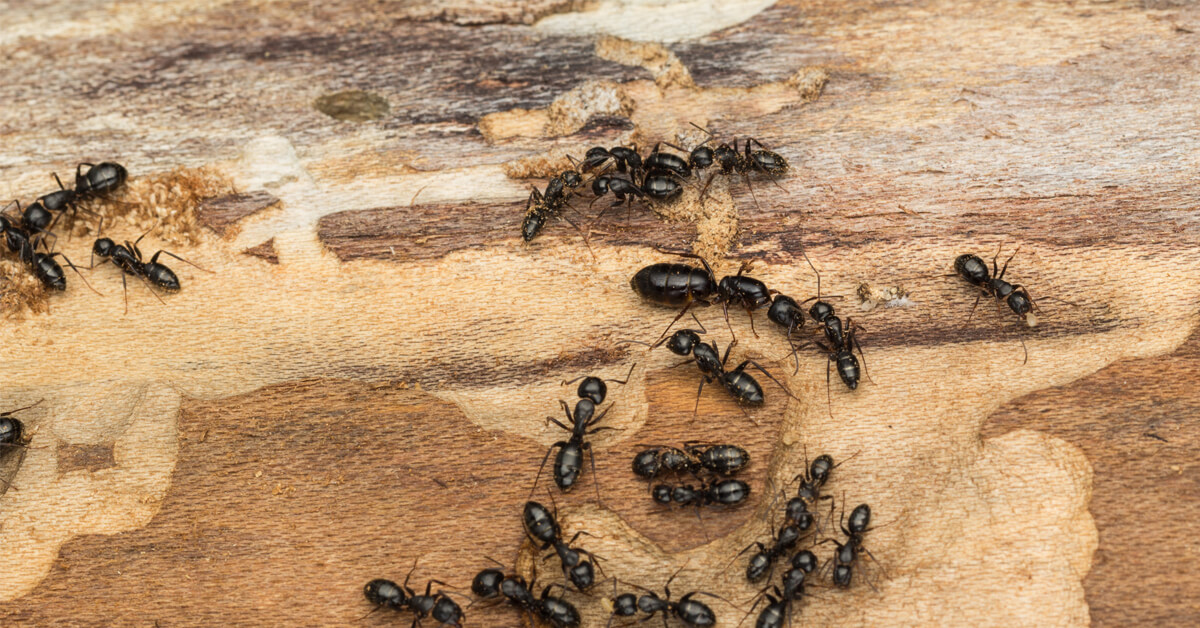


Carpenter ants are among the most concerning household pests found throughout New Jersey, Pennsylvania, Delaware, and the Eastern Shore of Maryland. While they don’t eat wood like termites, they tunnel through it to build nests—often inside structural areas of homes. Because of this, infestations can go unnoticed for long periods while damage slowly develops.
Understanding how carpenter ants behave, what signs to look for, and when to call a professional can help prevent costly structural issues.
1. Seeing Only a Few Ants Doesn’t Mean the Problem Is Small
One of the most common misconceptions about carpenter ants is that visible activity reflects the size of the infestation. In reality, seeing only a few ants indoors does not mean the colony is small.
Carpenter ant colonies often exist inside walls, voids, or nearby outdoor nesting sites. Workers may travel into homes only to forage for food and then return without being noticed.
In many cases, ants seen indoors are only a small fraction of a much larger colony.
2. Winged Ants Are a Warning Sign of a Mature Nest
Winged carpenter ants inside or around your home are often a sign of a mature, established colony.
These winged ants—known as swarmers—are reproductive ants that leave the colony to start new nests. If you are regularly seeing winged ants indoors, especially near windows or light sources, it may indicate that a colony is already established within or near your structure.
Multiple sightings can also suggest more than one nesting site.
3. Ant Trails and “Testing Food” Doesn’t Work the Way You Think
It is a common myth that leaving food out will quickly reveal whether carpenter ants are present. In reality, carpenter ants do not automatically swarm food sources.
Instead, worker ants must first locate food. Once they find it, they leave behind a chemical pheromone trail that guides other ants to the same source. This is why a single ant can sometimes turn into a full trail seemingly overnight.
Because of this behavior, infestations can appear suddenly even when activity seemed minimal before.
4. The Real Threat Is Structural Damage Over Time
Carpenter ants do not consume wood for nutrition, but they excavate it to create nesting galleries. Over time, this tunneling can weaken structural components of a home.
Common signs of carpenter ant activity include:
- Small holes in wood surfaces
- Fine sawdust-like material (frass) near baseboards or beams
- Hollow-sounding wood when tapped
- Large black ants indoors or around the structure
Even though damage develops slowly, it can become significant if colonies remain untreated.
Carpenter Ants in Winter
Carpenter ants do not disappear in winter. Outdoor colonies may become less active in cold temperatures, but indoor colonies can remain active year-round if they have access to warmth and food.
This means winter sightings can still indicate an ongoing infestation rather than a seasonal occurrence.
Signs You May Have Carpenter Ants
Because carpenter ants often remain hidden, infestations can progress quietly. Common indicators include:
- Sawdust-like debris near wooden structures
- Large ants moving indoors, especially near kitchens or bathrooms
- Winged ants inside the home during warmer months
- Small openings or damage in wood
These signs often point to nesting activity inside walls, foundations, or nearby outdoor structures such as trees or stumps.
Why Professional Treatment Is Important
Carpenter ant infestations are difficult to eliminate without locating the main nest. Treating only visible ants rarely resolves the problem, since colonies may be hidden in wall voids or outdoors near the home.
Professional pest control technicians can identify nesting locations and apply targeted treatments to eliminate both primary and secondary colonies.
At Viking Pest Control, trained professionals provide inspection and treatment services throughout New Jersey, Pennsylvania, Delaware, and the Eastern Shore of Maryland to help address carpenter ant infestations and reduce the risk of long-term structural damage.
Contact Viking Pest Control
If you suspect carpenter ant activity in your home or property, early action is important to prevent further damage.
Call Viking at 800-618-2847 to learn more about carpenter ant pest control and extermination services, or get a fast, free quote online today!