


Termite Swarmers vs Carpenter Ant Swarmers
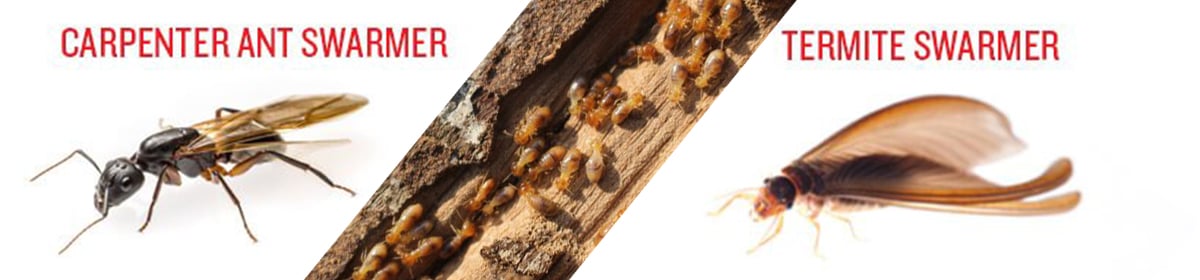


Seeing flying insects around your home in spring can be alarming, especially when they resemble termites. Because termite swarmers and carpenter ant swarmers look similar at first glance, many homeowners struggle to tell them apart.
Knowing the difference is important. While both pests can signal a larger infestation nearby, termites can cause serious structural damage if left untreated.
This guide explains how to identify termite swarmers, how they differ from carpenter ant swarmers, and what signs of infestation homeowners should watch for.
What Are Termite Swarmers?
Termite swarmers are reproductive termites that leave an established colony to mate and start new colonies.
Unlike worker termites that remain hidden underground or inside wood, swarmers emerge in large numbers during spring and early summer. Because they leave the colony, they are the termites homeowners are most likely to notice.
If you suddenly see flying termites indoors or around your property, it may indicate an active termite colony nearby.
What Do Termites Look Like?
There are several types of termites within a colony, each with different appearances and responsibilities.
Worker Termites
Worker termites are small, pale insects responsible for feeding and maintaining the colony.
Characteristics include:
- Cream or off-white coloring
- Soft bodies
- No wings
- No visible eyes
- Approximately 1/8 to 3/8 inch long
Soldier Termites
Soldier termites protect the colony from threats.
They typically have:
- Cream-colored bodies
- Large brown heads
- Strong jaws
- No wings
- No visible eyes
Termite Swarmers
Swarmers are the reproductive termites homeowners most commonly see.
They feature:
- Dark brown or black bodies
- Straight antennae
- Two pairs of long wings
- Wings longer than the body
- Visible eyes
Swarmers are usually about one inch long including their wings.
Carpenter Ant Swarmers vs. Termite Swarmers
Because both insects swarm during warmer months, they are commonly confused with one another.
However, there are several important differences.
Wing Size
Termite swarmers have long wings that extend well beyond their body length.
Carpenter ant swarmers have smaller wings that are only slightly longer than their bodies.
Antennae Shape
- Termites have straight antennae
- Carpenter ants have bent or elbowed antennae
Body Shape
Termites have broad bodies that appear mostly straight.
Carpenter ants have narrow “pinched” waists that clearly separate body segments.
Color
Termite swarmers are usually dark brown or black with lighter wings.
Carpenter ant swarmers are often darker overall and may appear shinier.
Signs of a Termite Infestation
Because termites spend most of their lives hidden, homeowners often notice the damage before they see the insects themselves.
Mud Tubes
Subterranean termites build mud tubes to travel between the soil and wood structures while protecting themselves from exposure.
These tubes may appear along:
- Foundation walls
- Basement surfaces
- Crawl spaces
- Support beams
Discarded Wings
After swarming, termites shed their wings.
Small piles of discarded wings near windows, doors, or light sources may indicate nearby termite activity.
Wood Damage and Frass
You may notice damaged wood, hollow-sounding surfaces, or small piles of debris and termite waste near infested areas.
Seasonal Swarming Activity
Swarming activity is most common during spring and early summer when reproductive termites leave colonies to establish new nests.
What to Do If You See Termite Swarmers
If you discover termite swarmers inside or around your home, avoid disturbing the area too much before an inspection.
Helpful steps include:
- Vacuuming visible swarmers and discarded wings
- Marking where swarmers appear to be emerging
- Avoiding tearing into walls or wood structures
- Contacting a professional termite exterminator promptly
Marking the activity area can help technicians locate the source of the infestation more efficiently.
Why Professional Termite Control Is Important
Although swarmers themselves do not damage structures directly, they indicate an established colony may already be present.
Professional termite treatment helps:
- Identify active colonies
- Prevent structural damage
- Eliminate existing infestations
- Protect against future termite activity
Because termites often remain hidden for long periods, early detection and treatment are critical.
Professional Termite Control From Viking Pest Control
Viking Pest Control provides professional termite control services throughout New Jersey, Pennsylvania, Delaware, and Maryland.
Our termite specialists can:
- Inspect your property for termite activity
- Identify swarmers and nesting areas
- Create customized treatment plans
- Help prevent future infestations
Schedule a Termite Inspection Today
If you’ve spotted flying termites, discarded wings, mud tubes, or signs of wood damage, it’s important to act quickly before the infestation worsens.
Learn more about Viking Pest Control and request a free termite inspection today.