





Have you ever gone to a July 4th barbecue and immediately found yourself, your food, and your drinks overwhelmed by wasps? Has the same thing happened on Labor Day? If every season had an official pest, then the wasp would undoubtedly be the Scourge of Summer. But why is that the case? And what can you do about it?
Wasp populations always start with queens. Wasp queens typically hide in safety during the winter and begin building their nests in late spring. By May, they are laying eggs and rapidly growing their populations. When July rolls around, a large population of workers is sent out into the wild to forage for food to bring home to the nest, and they happen to love summer sweets and savories ranging from meat to candy to soda.
That’s why outdoor gatherings become prime targets for hungry wasps. Backyard cookouts, pool parties, picnics, and outdoor festivals all provide easy access to food and sugary drinks. Open soda cans, overflowing trash bins, fruit trays, and grilling meats can quickly attract stinging insects looking for a quick meal. Unfortunately, once one wasp finds a food source, others may soon follow.
While wasp problems during your big day off may be nerve-wracking, it’s important to note that foraging wasps are generally less aggressive than wasps defending their nests. That said, they will absolutely defend themselves if threatened. Some species are more aggressive than others, with Yellow Jackets being known for being particularly quick to go on the attack. Unlike honey bees, many wasps can sting repeatedly, which makes encounters even more unpleasant for unsuspecting homeowners and guests.
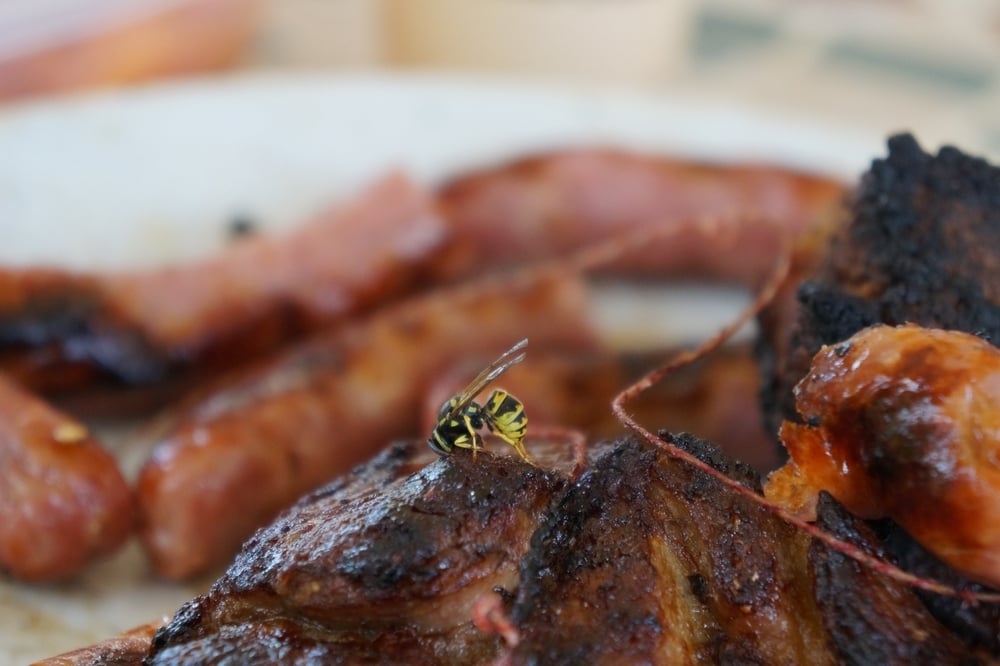
While wasp stings can be quite painful, they are rarely dangerous to anyone without an allergy. Still, safety precautions are always a good idea if you want to keep the sting out of your summer. Wasps will pursue the scent of available food, so it’s important to keep food covered or in containers when outside. This prevents the scent of your food from attracting unwanted wasp problems. Wasps aren’t above stealing food waste from trash receptacles, so it’s important to keep your garbage cans closed.
It’s also a good idea to inspect your property regularly for signs of nesting activity. Wasps commonly build nests under decks, inside sheds, beneath railings, around roof eaves, and even underground, depending on the species. Catching a nest early in the season can help prevent a small problem from becoming a major infestation later in the summer when colonies are at their peak size.
Homeowners should avoid trying to remove active nests on their own, especially larger nests or those located in hard-to-reach places. Disturbing a nest can quickly provoke defensive behavior and increase the risk of multiple stings.
If wasps are taking over your yard, Viking Pest Control can help. Our trained professionals can identify the species, locate nesting sites, and safely perform wasp extermination and wasp nest removal from around your home. Don’t let stinging insects ruin your summer celebrations. Contact Viking Pest Control today for award-winning wasp control to protect your property and enjoy your outdoor spaces with greater peace of mind all season long.