


How to Keep Your Home Protected From Carpenter Bees
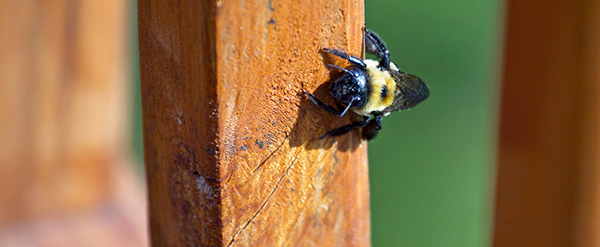


Carpenter bees are a common seasonal pest throughout New Jersey, Pennsylvania, Delaware, and the Eastern Shore of Maryland, and if you own a home in the region, chances are you’ll encounter them at some point. While they may look similar to bumblebees, their behavior and the damage they cause to wood structures make them a very different kind of problem for homeowners.
Understanding how carpenter bees behave, where they nest, and how to stop them early can save you from expensive structural damage—and in many cases, prevent a growing infestation before it starts.
What Is a Carpenter Bee?
A carpenter bee is a native insect found across much of the United States. They are large, often around one inch long, and are most commonly mistaken for bumblebees due to their similar size and coloring.
Unlike social bees, carpenter bees are solitary. They do not live in large hives. Instead, they bore into wood to create individual nesting tunnels where they lay eggs and raise their young.
How to Identify Carpenter Bees
Carpenter bees are fairly easy to recognize once you know what to look for:
- They are large, round-bodied bees similar in size to bumblebees
- They often have a shiny, almost hairless abdomen (unlike fuzzy bumblebees)
- Males may appear to have a yellow marking on the face
- Females are typically darker and lack the same facial coloring
A key sign of carpenter bee activity is the presence of clean, round holes in untreated or unpainted wood, often about the size of a dime.
Carpenter Bees vs. Bumblebees
It’s easy to confuse carpenter bees with bumblebees, but there are important differences:
Bumblebees are fuzzy, social insects that nest in the ground or in colonies. Carpenter bees are smoother, more metallic-looking, and prefer to drill into wood rather than live in groups.
This nesting behavior is what makes carpenter bees a concern for homeowners—not their presence alone, but the damage they leave behind.
What Damage Do Carpenter Bees Cause?
Carpenter bees don’t eat wood, but they tunnel into it to build nesting galleries. Over time, these tunnels can become extensive—sometimes stretching deep into beams, decks, fascia boards, and siding.
This can lead to:
- Weakening of wooden structures
- Cosmetic damage (visible holes and staining)
- Moisture intrusion leading to rot and decay
- Long-term structural integrity issues if left untreated
Decks, porch railings, sheds, eaves, and untreated wood surfaces are especially vulnerable.
Where Carpenter Bees Commonly Nest
Carpenter bees prefer soft, unfinished, or weathered wood. Around the home, they are commonly found in:
- Decks and porch railings
- Fascia boards and soffits
- Eaves and rafters
- Wooden outdoor furniture
- Sheds and play structures
One of the biggest risk factors is exposed or unsealed wood. Once bees establish tunnels, they often return to the same area year after year and expand existing damage.
When Are Carpenter Bees Active?
In the Northeast region, carpenter bees typically become active in spring as temperatures warm. This is when they begin mating, drilling new nesting tunnels, and expanding existing ones.
They remain active through spring and summer, then overwinter inside their tunnels, emerging again the following year. This cycle makes early prevention especially important.
Do Carpenter Bees Sting?
Carpenter bees are generally not aggressive, but there are differences between males and females:
- Male carpenter bees often hover and “dive-bomb” people, but they cannot sting
- Female carpenter bees can sting, but typically only do so if directly handled or threatened
In most cases, the real issue is not stings—it’s the structural damage they cause over time.
How to Prevent Carpenter Bees
The most effective way to discourage carpenter bees is to make your home less attractive to them:
- Paint or seal all exposed wood surfaces
- Repair or replace damaged or weathered wood
- Fill old nesting holes with wood putty or dowels
- Use exterior-grade finishes on decks and trim
- Inspect wood structures each spring for early signs of activity
Prevention helps, but once carpenter bees establish active tunnels, DIY methods often fall short of fully eliminating the problem.
How to Get Rid of Carpenter Bees for Good
Carpenter bee infestations are difficult to control once they spread into multiple nesting sites. Even if you plug visible holes, bees may already be deeper inside the wood—or may simply drill new entry points nearby.
That’s why many homeowners turn to professional treatment instead of trying to manage the problem alone.
A targeted pest control approach focuses on:
- Identifying active nesting sites
- Treating adult carpenter bees safely and effectively
- Addressing hidden larvae inside tunnels
- Preventing reinfestation through long-term protection strategies
Why Homeowners Choose Viking Pest Control
When carpenter bees start damaging your home, fast action matters. That’s where Viking Pest Control comes in.
With decades of experience protecting homes across the region, Viking Pest Control understands how quickly carpenter bee damage can escalate—and how to stop it at the source.
Their technicians don’t just treat visible activity. They inspect your property for hidden nesting sites, assess wood vulnerability, and provide long-term prevention strategies designed to keep carpenter bees from coming back.
Instead of guessing or relying on temporary fixes, homeowners get a complete solution that protects both the structure and value of their property.
Protect Your Home with Viking Pest Before Damage Spreads
Carpenter bees may seem like a minor nuisance at first, but the damage they cause builds over time. What starts as a few small holes can turn into weakened boards, structural repairs, and recurring infestations year after year.
If you’ve noticed signs of carpenter bee activity—or want to prevent them before they start—the safest move is to bring in a professional early.
For reliable, long-term carpenter bee control in NJ, PA, DE, and the Eastern Shore of Maryland, contacting Viking Pest Control is one of the most effective ways to protect your home and stop damage before it spreads.