


How to Get Rid of Carpenter Bees and Protect Your Home From Damage
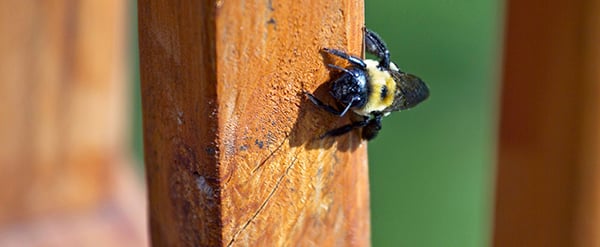


Carpenter bees may look similar to harmless bumble bees, but these wood-boring insects can cause serious damage to homes throughout New Jersey, Pennsylvania, Delaware, and Maryland if left untreated.
Unlike termites, carpenter bees don’t eat wood. Instead, they tunnel through it to create nesting galleries where they lay eggs and shelter during the colder months. Over time, repeated nesting activity can weaken decks, railings, siding, fences, eaves, and other wooden structures around your home.
If you’ve noticed perfectly round holes in wood surfaces or large bees hovering around your property, you may be dealing with carpenter bees.
What Do Carpenter Bees Look Like?
Carpenter bees are large black and yellow bees often mistaken for bumble bees. The easiest way to tell the difference is by looking at the abdomen.
- Carpenter bees have a smooth, shiny black abdomen.
- Bumble bees have a fuzzy abdomen covered in hair.
Carpenter bees are solitary insects, meaning they do not live in large colonies like honey bees or bumble bees. Instead, each female creates her own nest by boring into wood.
Signs of Carpenter Bee Activity
One of the most obvious signs of carpenter bees is the appearance of smooth, perfectly round holes in exposed wood. These holes are usually about half an inch wide and may appear in:
- Decks and railings
- Wooden siding
- Porch ceilings
- Fences
- Fascia boards
- Window and door trim
- Wood shingles and overhangs
You may also notice:
- Small piles of sawdust beneath holes
- Bees hovering near wooden structures
- Increased woodpecker activity
- Buzzing sounds around eaves or decks
Carpenter bee tunnels typically begin several inches deep but can expand over time as multiple generations reuse the same nesting sites year after year.
Are Carpenter Bees Dangerous?
Carpenter bees are more destructive to property than they are dangerous to people.
Male carpenter bees often appear aggressive and may hover or dive toward people near their nesting areas, but males do not have stingers. Female carpenter bees can sting, though they are generally docile and rarely do so unless directly threatened.
The bigger concern is the long-term structural damage carpenter bees can cause. Repeated tunneling weakens wood and may eventually lead to costly repairs if infestations continue untreated.
How to Prevent Carpenter Bees
Prevention is one of the best ways to protect your home from carpenter bee damage.
Paint or Seal Exposed Wood
Carpenter bees prefer untreated or unfinished wood. Painting, staining, or sealing wooden surfaces makes them far less attractive for nesting.
Repair Existing Holes
Old carpenter bee tunnels can attract future generations. Once activity is eliminated, fill holes with wood filler or sealant and repaint the area.
Inspect Wooden Structures Regularly
Check decks, fences, soffits, railings, and trim each spring for new holes or signs of activity.
Use Hardwoods When Possible
Hardwoods are generally less appealing to carpenter bees than softer woods like pine, cedar, fir, or redwood.
How to Get Rid of Carpenter Bees
DIY carpenter bee treatments are often ineffective because each individual gallery must be treated properly. Missing even a few active tunnels can allow the infestation to continue.
Professional carpenter bee control is the safest and most effective solution, especially when infestations spread across multiple wooden structures.
At Viking Pest Control, our trained pest management professionals identify carpenter bee activity, locate hidden galleries, and recommend the best treatment plan for your property.
Our carpenter bee services help:
- Eliminate active infestations
- Prevent recurring nesting activity
- Protect wooden structures from future damage
- Reduce the risk of long-term structural repairs
Professional Carpenter Bee Control with Viking Pest in NJ, PA, MD, and DE
If you’re seeing carpenter bees around your home or noticing damage to wooden structures, early treatment can help prevent costly repairs later.
Viking Pest Control has been helping homeowners throughout New Jersey, Pennsylvania, Delaware, and the Eastern Shore of Maryland protect their homes from carpenter bees and other wood-destroying pests for decades.
Contact Viking Pest today for a fast, free estimate and learn more about our carpenter bee control and prevention services.